Fairness Cream, Shapewear and Talc: Risks and Safer Swaps
Prefer to watch? Open the full video on YouTube.
Daisy explains why she warns against daily fairness creams, tight shapewear and talcum powder, and names cleaner brands and habits she prefers instead.
Key takeaways
- Daisy says mercury in fairness creams can damage the kidneys and nerves, and can cause the darkening people are trying to avoid.
- She warns most strongly against imported creams and capsules sold online with no ingredient label.
- Words like Ayurvedic or natural on a pack do not guarantee a clean product, so she says to read the ingredient list.
- If you wear shapewear, she suggests going one size up and checking that you can still take a long, deep breath.
- She worries that talc can carry asbestos and names powders based on arrowroot, tapioca or corn starch as swaps.
- She says occasional use is far less worrying than daily use, which is where the real risk lies.
On this page (6 sections)
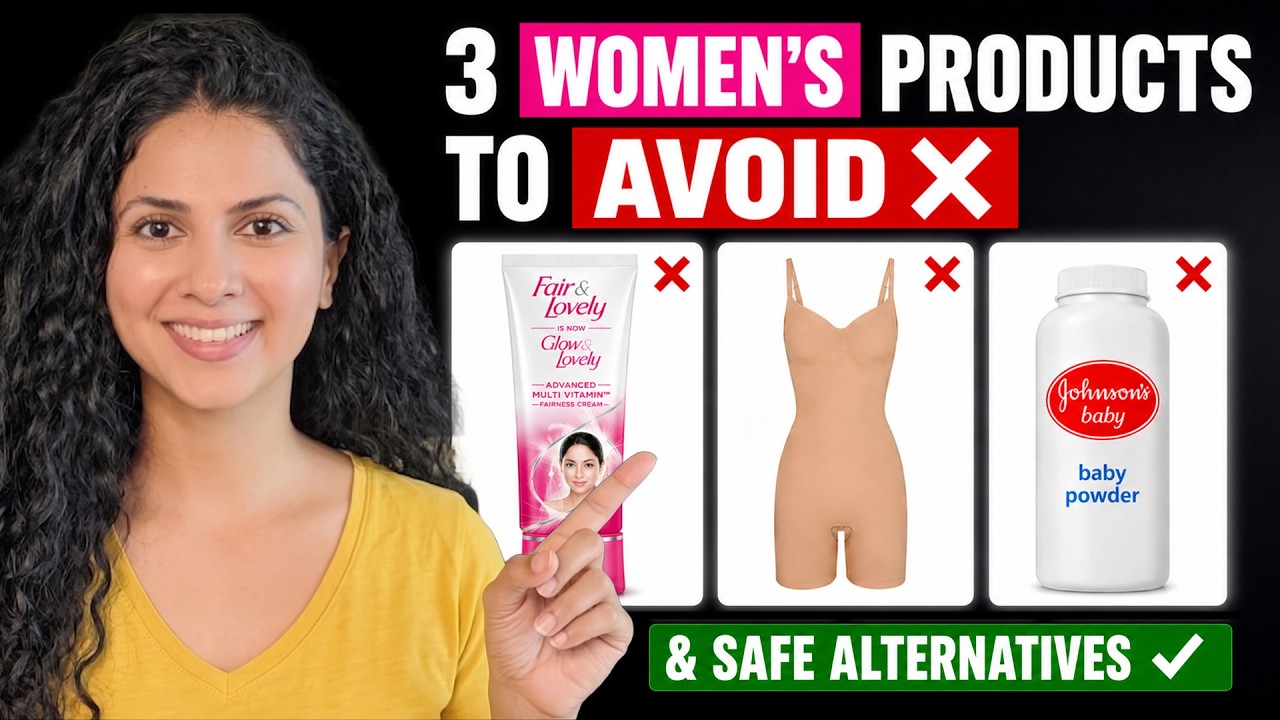
Fairness creams, tummy-tucking shapewear and talcum powder sit in many Indian bedrooms and handbags. Daisy says all three can quietly harm your health when used daily. She is not asking you to feel guilty, since she has worn shapewear herself. Her point is that context matters: how often you use a product, what it contains and your own health history. In this video she explains the risks and offers swaps.
Why does Daisy warn against fairness creams?
Daisy starts with a simple idea: if you try to lighten something you were born with, it takes a lot of chemicals to undo it. She says many fairness creams use mercury, which is banned in India. She says mercury switches off the cells that make skin colour, and she links it to kidney damage, nerve damage and a weaker immune system.
She also says arsenic and lead turn up in some of these formulations. She cites a finding that 14 of 32 fairness cream brands in India had mercury, though she says the levels in well-known Indian brands were very low. Her main concern is regular use. Daisy says about 67 percent of Indian women use these creams regularly, and she calls it a slow poison.
The worst products, she says, are imported creams and fairness capsules sold online from other countries under fake names. She cites levels as high as 31,700 parts per million, and a bank employee who developed kidney damage within six months of using an imported cream. Daisy also says many users report dark spots and darker skin after long use, which she calls rebound pigmentation.
She adds a warning about packaging. Brands use green colours, fruit pictures and words like “Ayurvedic” to look natural, which she calls greenwashing. Her advice is to ignore the photo and read the ingredient list.
Safer brightening options Daisy suggests
Daisy calls Vicco Turmeric one of the cleaner mass-market Indian creams. It has 16 percent turmeric, though she notes it has low levels of parabens. She also likes Kama Ayurveda’s brightening night cream, which she says is about 95 percent toxin-free. It uses saffron, which she calls a natural tyrosinase inhibitor (it slows the enzyme that makes skin pigment), and manjistha.
At home, Daisy makes her own cream in under two minutes. She uses licorice (mulethi), manjistha, red sandalwood, priyangu and nagara. She uses it for pigmentation, dark spots, scars, tan and dullness, and lately on her underarms. She plans to share it in another video.
Why is daily shapewear a problem?
Daisy has no problem with wearing shapewear on occasion. Her concern is daily wear of tummy tuckers and full bodysuits. She says they compress the stomach, intestines and reproductive organs and make breathing uncomfortable. She also says they can worsen acid reflux by pushing stomach acid up.
She links shapewear to urinary tract infections. Many women avoid the toilet for hours while wearing it. She calls it a contributing factor, not the only cause, together with the warm, moist space under the fabric and pressure on the bladder.
Daisy also says that tight shapewear does the work your core muscles would normally do, so they can weaken with regular use. In her view, a product bought to make you look slimmer can leave you less fit over time.
Tips if you still want to wear it
- Buy one size larger than you think you need.
- If you cannot take one long, comfortable, deep breath, the size is too small.
- Choose branded shapewear with soft fabric.
- Try styling and fit changes to flatter your shape.
- For lasting change, Daisy says the real answer is exercise and eating right. She links her weight-loss video in the description.
Is talcum powder safe?
Daisy points to lawsuits against Johnson and Johnson, where claimants allege their talc products contained asbestos. She notes the company denies the allegations. She also cites tests by an Indian toxicology institute that, she says, found asbestos fibres in five talcum powders sold in India. The brands were not named publicly.
Her explanation is that talc itself is not the issue. Talc and asbestos can lie close together underground, so unless talc is purified carefully, it can carry fibres. Daisy says there is no safe level of asbestos exposure.
For swaps, she names two powders. Juicy Chemistry’s organic dusting powder is made with arrowroot, tapioca starch, kaolin clay, rose powder and essential oils. Forest Essentials’ baby powder is 89 percent corn starch with cocoa butter, oatmeal and saffron. She warns that corn starch can feed yeast infections in some people, especially in intimate areas.
Daisy herself uses a quick homemade powder mix for sweat, oil and underarm pigmentation. She lives in hot, humid Mumbai and says it absorbs sweat well. She plans to share that recipe too.
What research says
Daisy’s mercury warning matches what health bodies say. PAHO and the WHO list kidney damage, rashes, discolouration and scarring among the harms of mercury creams. A case series from India described three young women with kidney disease after using one cream that contained 2,180 to 7,698 ppm of mercury. All three improved after they stopped it.
Talc is less clear. A pooled study of four large US groups found no statistically significant link between genital powder and ovarian cancer, but said it may have missed a small risk. A 2024 systematic review found modest increases in ovarian cancer risk in case-control studies, and said evidence on asbestos-free talc was inadequate. Solid studies on everyday shapewear and health are lacking, so Daisy’s points there rest on her own experience.
Daisy’s tips
- Check the ingredient list, not the front of the pack.
- Be suspicious of creams or capsules with no label, especially imported ones from online sellers.
- Occasional use matters less than daily use, so keep shapewear for special days.
- If you get repeated urinary infections, notice what you wear and how long you hold your urine.
- Patch test any new powder, and be careful with corn starch near intimate areas.
Daisy covers all three products, with brand names and her own swaps, in the video above. It takes about 16 minutes.
Questions people ask
Are fairness creams safe to use?
Daisy says no for regular use. She explains that many contain mercury, which she links to kidney and nerve damage, and that long-term use can cause rebound pigmentation and darkening. She is most worried about imported creams and capsules with no ingredient label.
Is it bad to wear shapewear every day?
Daisy says wearing it occasionally is fine, but daily use compresses the stomach and pelvic organs, can worsen acid reflux, and may weaken your core. She says going a size up and being able to breathe deeply are the tests of a safer fit.
Can shapewear cause urinary tract infections?
Daisy calls it a contributing factor, not the only cause. She points to holding urine for hours, the warm and moist space under the garment, and pressure on the bladder.
Is talcum powder safe for women to use?
Daisy is concerned that talc can carry asbestos fibres if it is not purified well, and she cites lawsuits against a major brand. Research on talc and ovarian cancer is mixed, so talc-free powders are a simple swap if you want to avoid the question.
What can I use instead of a fairness cream?
Daisy names Vicco Turmeric and Kama Ayurveda's brightening night cream as cleaner shop-bought options. She also makes her own cream from licorice, manjistha, red sandalwood, priyangu and nagara, and plans to share it in a separate video.
Further reading
- PAHO/WHO: Mercury in skin lightening soaps and creams
- Sultan et al., 2023: kidney disease in three women after using a mercury skin lightening cream (Mumbai and Akola, India)
- O'Brien et al., JAMA 2020: powder use in the genital area and ovarian cancer risk
- Mirabelli and Terracini, 2024: systematic review of the evidence on talc and talcum powder
This article shares Daisy's personal experience and traditional Ayurvedic knowledge for general information. It is not medical advice. Talk to your doctor before changing medicines or treating a health condition, and patch-test anything new on your skin. Read the full disclaimer.
Watch Daisy explain it
The full video shows every step, in about 16 minutes.