Hormonal Hair Loss: Fix Insulin, PCOS and Gut, Says Daisy
Prefer to watch? Open the full video on YouTube.
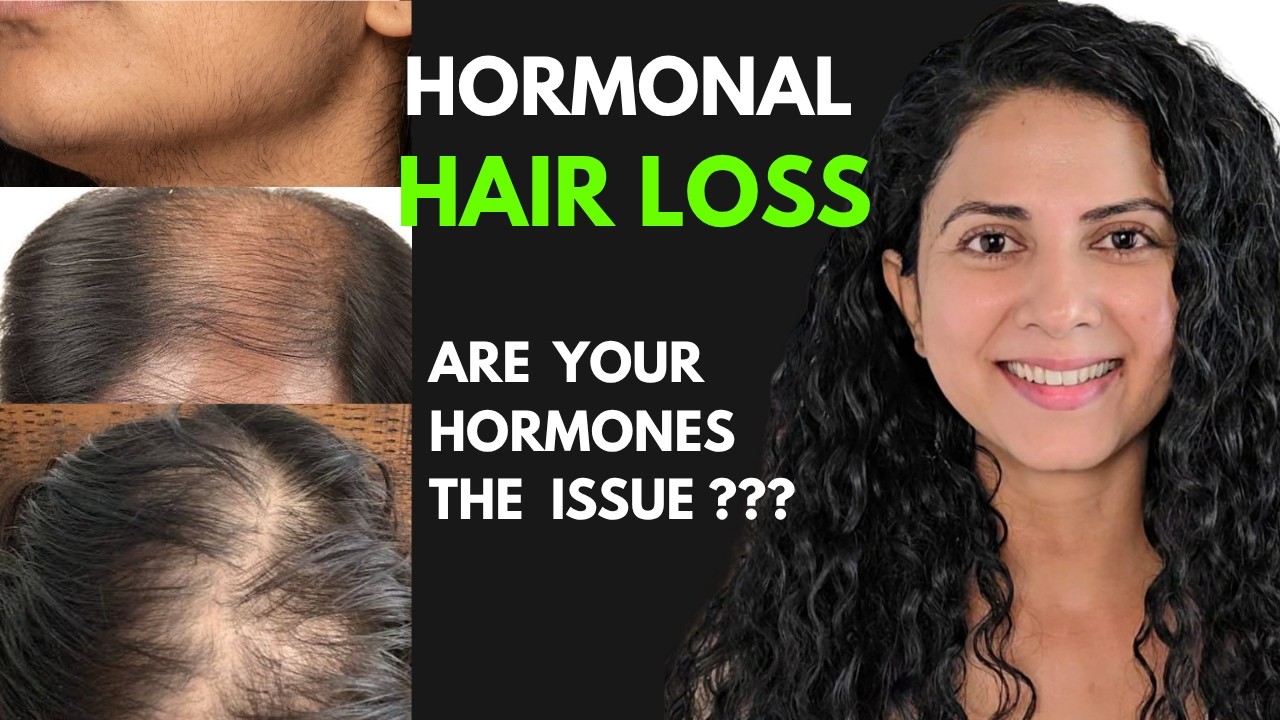
Daisy says hormonal and pattern hair loss starts with insulin resistance, inflammation and a stressed gut, so she treats those roots with millets, shatavari, seeds, exercise and sleep.
Key takeaways
- Daisy says genes only create the tendency. Insulin, inflammation, stress and diet decide how fast hair loss comes.
- She replaces rice and wheat with millets and eats fermented millet ambuli for gut health.
- She calls shatavari the queen of herbs for women's hormones, but says to take it under an Ayurvedic doctor's guidance.
- Seed cycling uses flax and pumpkin seeds before ovulation, then sesame and sunflower seeds after.
- Daisy picks exercise you enjoy, keeps it moderate, and loses weight slowly.
- She says shedding continues for about 3 months, so give any plan 3 to 4 months.
On this page (8 sections)
You change shampoos, take supplements and still the hair keeps falling. Daisy says that is because most people treat the hair and not the hormones behind it. Her video explains how insulin, PCOS, inflammation and gut health link to pattern hair loss in both women and men. Then she shares the food, herbs and habits she uses to work on the root.
Why hormonal hair loss keeps happening
Daisy uses a kitchen picture. If chai boils over, you turn down the flame instead of wiping the counter again and again.
She explains that excess male hormones such as testosterone or DHEA turn into DHT, a stronger form of testosterone. Over time, DHT shrinks the hair follicles in sensitive areas like the crown and the temples. This is why pattern hair loss looks the same in many people.
Daisy links this to insulin resistance, a state where the body needs more and more insulin to handle sugar. She says insulin speeds up hair loss in men and pushes the body to make extra testosterone in women. She says about 70 to 80% of women with PCOS have this insulin-driven type.
“Genetics only loads the gun. Your lifestyle pulls the insulin trigger,” she says. In her view, insulin resistance, PCOS, inflammation and stress feed one another, and stress sits at the top. If you take medicine for PCOS or diabetes, keep your doctor in the loop.
Foods that fuel the problem
Daisy names three food groups that she says worsen insulin and inflammation.
- Refined grains such as wheat, maida and white rice, which she says spike blood sugar within 40 to 45 minutes.
- Refined and hydrogenated oils, hidden palm oil in packaged food, sugar and deep-fried food.
- Milk and milk products. She says today’s milk carries A1 casein, which many adults cannot digest well. She also says its IGF-1 (insulin-like growth factor) can push the ovaries to make more testosterone.
She says ongoing low-grade inflammation cuts the tiny blood flow to hair follicles. She describes it as strangling them.
Why Daisy starts with the gut
Daisy calls the gut the headquarters of your hormones. She says gut microbes help shape cravings, appetite and mood, and that most of the body’s serotonin and GABA, the calming chemical, come from the gut. She links a weak gut to low GLP-1, a fullness hormone, and says this is the hormone that weight-loss injections such as Ozempic imitate.
Her top gut food is millet ambuli, a fermented millet drink made from the five positive millets. She says it gives far more variety of microbes than curd. She also swaps rice and wheat for millets in her meals. She says their fibre releases sugar slowly, so you feel full and have fewer cravings. Roti, idli, dosa and biryani can all be made with millets.
Her plate is millets, plenty of vegetables, dal, beans, sprouts, nuts and seeds, cooked in cold-pressed or wood-pressed oil.
Shatavari, the queen of herbs
Ayurveda calls shatavari the queen of herbs for women. Daisy says it supports every life stage. She says it can regularise periods, calm acne, help ovulation and ease menopause symptoms. For PCOS she says it may reduce cyst size and balance the LH to FSH ratio, which is a hormone balance that often goes off in PCOS.
She also says it helps stop excess male hormones turning into DHT.
Daisy is firm on one thing. Do not self-medicate for hormonal problems. There are different types of PCOS, so see an experienced Ayurvedic doctor. Men can take it too, only under medical guidance. If you are pregnant, ask your doctor first. At home, she makes shatavari laddus with seven seeds and nuts, amla powder and coconut.
Seed cycling, exercise and DHT blockers
Seed cycling. Count day 1 as the first day of your period. On days 1 to 14, eat flax and pumpkin seeds. On days 15 to 28, eat sesame and sunflower seeds. Take one to two tablespoons daily, roasted and powdered or chewed. Daisy says ovulation dates vary with PCOS, so treat the dates as a rough guide.
Exercise. She gives four rules: move every day, choose something you enjoy, and lose weight gradually. Also avoid overdoing hard cardio, because it can raise the stress hormone cortisol. She likes yoga for calming the nervous system. She also stresses staying active all day, for example by standing, walking after meals and taking the stairs.
DHT blockers. Of the many remedies online, Daisy found support for just two: pumpkin seeds and flax seeds.
What research says
Both of Daisy’s examples come from small studies, so read them as early signs.
A 2014 trial in 76 men with pattern hair loss found that 400 mg of pumpkin seed oil a day raised hair count by about 40% in 24 weeks. The placebo group gained about 10%. It was in men only, and it did not test pumpkin seeds eaten whole.
Daisy’s flax numbers match a 2007 case study of one woman with PCOS. She ate 30 g of flaxseed a day for four months. Her total testosterone fell from 150 to 45 ng/dl, and she reported less hirsutism. One case cannot prove a result for everyone.
A 2021 review of millet studies found that millets have a lower glycaemic index than white rice and refined wheat. Long-term millet eating also lowered blood sugar in people with diabetes. Hair was not studied. For shatavari, a review notes that Ayurvedic texts use it as a galactogogue, a milk-supporting herb. It adds that scientific proof for many uses of the root was limited. No solid study on shatavari and PCOS hair loss turned up, so research here is still limited.
Stress, sleep and patience
Daisy also warns about endocrine-disrupting chemicals in many cosmetics. She says they can build up through the skin and interfere with hormones, so she prefers chemical-free brands.
She says ongoing stress and poor sleep can undo the other work. We can handle stress, she says, but not months of it unresolved. She says to aim for deep, unbroken sleep.
Thyroid hair loss works differently from the DHT type, and Daisy plans a separate video on it.
Daisy’s tips
- Do not judge progress by current shedding. Hair falls about 3 months after the trigger.
- Give the plan 3 to 4 months, longer for severe loss.
- Start early, before follicles shrink fully.
- Swap rice and wheat for millets, and cook in cold-pressed oil.
- See an Ayurvedic doctor before taking shatavari medicines.
- Choose exercise you enjoy, and avoid sudden crash diets.
Daisy explains each step in the video above. It takes about 22 minutes.
Questions people ask
Can PCOS and insulin resistance cause hair fall?
Daisy says yes. In her explanation, insulin resistance makes the body produce extra testosterone, which turns into DHT and shrinks hair follicles. If you take medicine for PCOS or diabetes, keep your doctor in the loop.
Which millets does Daisy recommend for hormonal hair loss?
She recommends the five positive millets, or siridhanya: foxtail, kodo, barnyard, brown top and little millet. She uses them in place of rice and wheat.
What is seed cycling?
Seed cycling means eating different seeds in each half of your cycle. Daisy suggests flax and pumpkin seeds on days 1 to 14, and sesame and sunflower seeds on days 15 to 28.
Is shatavari safe for hormonal hair loss?
Daisy calls shatavari a boon for women at every age, but she says not to self-medicate for hormonal issues. See an experienced Ayurvedic doctor first, especially if you are pregnant or have a health condition.
How long does hormonal hair loss take to improve?
Daisy says hair falls about 3 months after the trigger, so shedding continues at first. She suggests giving the plan at least 3 to 4 months, longer if the loss is severe.
Further reading
- Effect of pumpkin seed oil on hair growth in men with androgenetic alopecia: a randomized, double-blind, placebo-controlled trial (2014)
- The effect of flaxseed supplementation on hormonal levels associated with polycystic ovarian syndrome: a case study (2007)
- A systematic review and meta-analysis of the potential of millets for managing and reducing the risk of developing diabetes mellitus (2021)
- Asparagus racemosus (shatavari): an update (2003)
This article shares Daisy's personal experience and traditional Ayurvedic knowledge for general information. It is not medical advice. Talk to your doctor before changing medicines or treating a health condition, and patch-test anything new on your skin. Read the full disclaimer.
Watch Daisy explain it
The full video shows every step, in about 22 minutes.