Millets for Diabetes, BP and Gut Health: Dr. Khadar Vali

Prefer to watch? Open the full video on YouTube.
Dr. Khadar Vali tells Daisy why he believes the fibre in five positive millets steadies blood sugar and BP, feeds the gut, and replaces the need for extra protein.
Key takeaways
- Dr. Vali says millet fibre releases glucose slowly, so there is no sugar spike and no 'thick blood' strain on the heart.
- He ranks millets by fibre: foxtail, kodo, little, barnyard and brown top are 'positive', while ragi, bajra and jowar are 'neutral'.
- He says watery fermented millet ambali grows far more varied gut bacteria than curd or idli.
- He argues you do not need high protein, and that dals carry a lot of starch.
- He links food to hormone balance and fertility, and recommends local oils from wooden bull-driven presses.
- If you take medicine for diabetes, BP, thyroid or PCOS, keep your doctor in the loop.
On this page (8 sections)
Many people ask the same questions about millets. Do they really help with sugar and BP? Which ones should you buy? Does gut health come into it? Daisy sat down with Padma Shri Dr. Khadar Vali Dudekula, called the Millet Man of India, to ask. These are the key ideas, each one his view.
Dr. Vali has a PhD from the Indian Institute of Science, Bengaluru. He revived the five “positive” millets, which he calls Siri Dhanya. Daisy says his work changed her own health journey.
Why millet fibre matters for blood sugar
Dr. Vali says the special thing about millets is their fibre. Many foods have fibre. He says the type matters.
He describes three grades. Fruit and vegetables have “nascent” fibre. Roots and tubers have “immature” fibre. Millets have “mature” fibre, which he calls regulating fibre. He gives them rough scores of 5, 15 and 100.
He says mature fibre releases glucose slowly and steadily. Rice and wheat, in his words, dump glucose into the blood within 15 to 20 minutes. Then you feel hungry again.
He connects the dots as follows. Too much glucose means thick blood, and the heart has to pump harder. That is how he explains BP, and he says high glucose and BP are the same problem. Slow release avoids this, he says.
He also wants people to say “slow carb”, not “low carb”. In his words: “It is slow carb that will give you health.”
Positive and neutral millets
Dr. Vali sorts millets by fibre content.
- Neutral millets are ragi (about 3.6% fibre), jowar (about 2.2%), proso (about 2.2%) and bajra (about 1.2 to 1.3%).
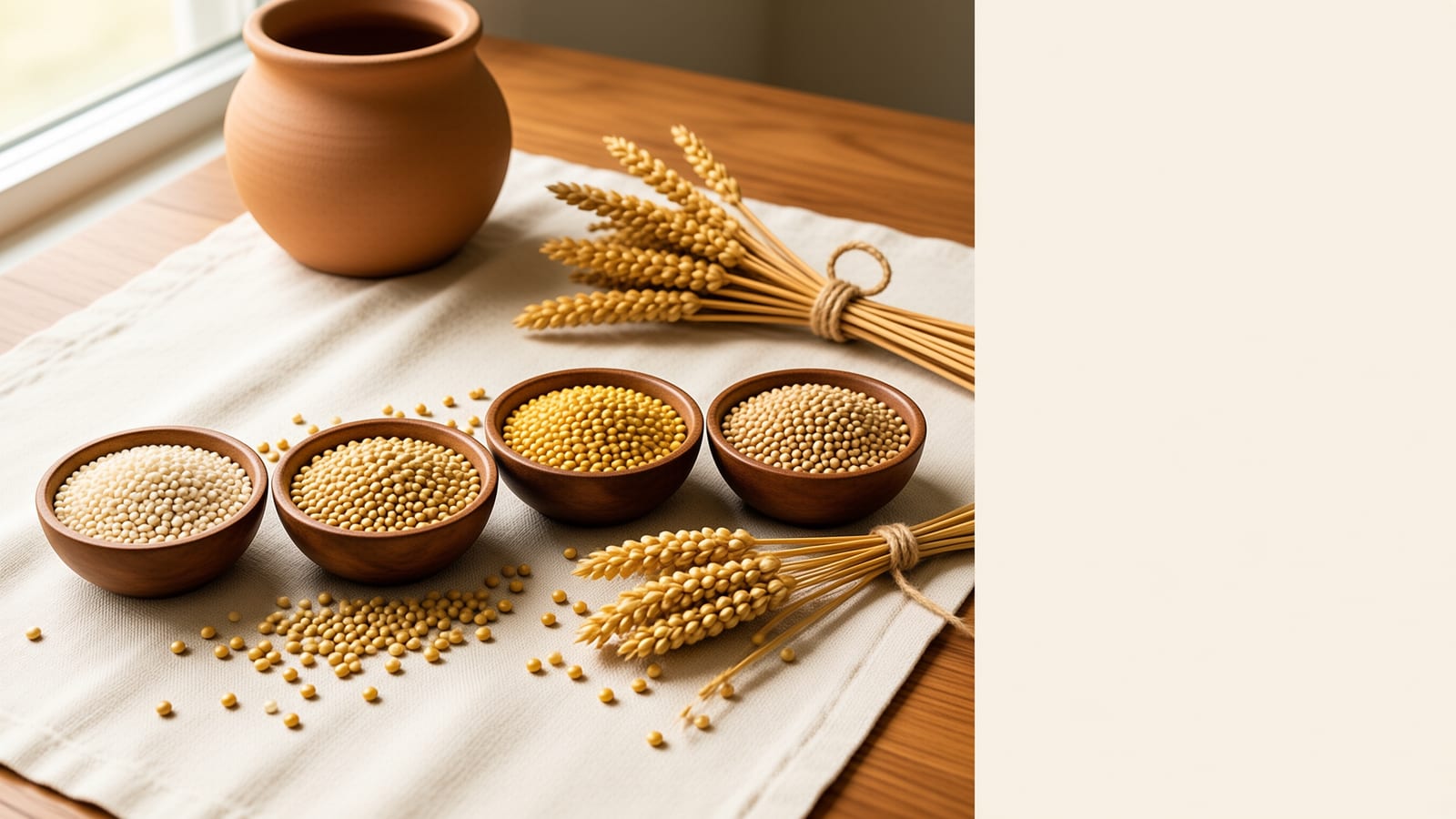
- Positive millets are foxtail (about 8%), kodo (about 9%), little millet and barnyard (about 10%) and brown top (about 12.5%).
He says neutral millets protect you if you are healthy. They are not strong enough to reverse illness while you also eat wheat, sugar and coffee. For someone with a high HbA1c, he says only the positive five have the power to help.
He says results depend on how long you have been unwell. A recent diagnosis may respond in weeks. Long-standing problems may take 3 to 6 months or more. He says he has helped many thyroid and diabetes patients come off tablets. Treat that as his claim. If you take medicine, do not change it on your own.
Ambali and the gut
Dr. Vali compares fermented foods. Curd, idli and dosa ferment without oxygen, with only a handful of microbes. He says ambali, made from mature millet fibre, lets oxygen in and grows thousands of bacterial types. Daisy’s separate video covers the recipe.
He explains the details of the method:
- Use about 5 g of millet to 500 ml of water. More grain makes it thick and uses up the oxygen.
- Use a mud pot and a muslin cloth, not steel or plastic, so air can pass.
- Drink the cloudy water. You do not need to eat the grain.
- Drink it on an empty stomach, then wait 3 to 5 minutes before you eat. Solid food shuts the valve at the bottom of the stomach, and acid would kill the microbes.
- Skip tea and coffee straight after. He calls coffee “a direct enemy” of gut microbes.
He says the gut microbes talk to the brain and skin and make neurotransmitters. He also says that 2 to 3 months of ambali helped patients with food intolerances and allergies. Daisy says she has felt a difference in energy herself.
Inflammation and wood
Dr. Vali says the root of most disease is inflammation. He says millet lignans, a fibre compound, calm free radicals. His example is that a wooden chair stays cooler than a plastic one.
He ties this to oils from wooden bull-driven presses. He says the wood adds an anti-inflammatory effect and that slow rotation keeps the oil cool. He prefers these to machine “cold pressed” oils.
His oil advice is simple. Use local oils such as sesame, groundnut, coconut or mustard, and rotate them. Keep it to 15 to 30 ml a day, about 1 litre a month for one person.
Protein, dals and carbs
This is his boldest section. Dr. Vali says most people do not need extra protein. He says millets already give about 7 to 12 g per 100 g, and brown top and foxtail are the richest.
He argues that dals have 20 to 24% protein but also about 60% sugar. In his words, lentils are not equal to protein. He suggests half a bowl of dal a day. He would skip protein powders and animal protein.
His view is that fibre has to come with protein and carbs. He says that without fibre to regulate them, they cause problems. He blames kidney strain on protein overload.
This view differs from mainstream advice. If you have kidney disease, are pregnant or train hard, ask a doctor or dietitian before changing your protein.
Hormones, fertility and children
Dr. Vali says the food supply is hurting fertility. He says balancing sex hormones through food can help, and he calls little millet good for girls. PCOS is not named, though the talk covers hormone balance and conception.
He says he has seen couples conceive after IVF while following his protocols, and that the problem often starts with male hormones. These are his cases, not trial results.
For babies, he says mother’s milk comes first. After weaning, he suggests ragi or bajra milk and, for the rich, poppy seed payasam. He says bajra supplies cobalt, which gut microbes use to make vitamin B12. He also says sesame and poppy seeds have more calcium than ragi.
What research says
Some of his points have support. A 2021 review of 65 studies found millets have a mean glycaemic index of about 52.7, around 36% lower than milled rice. Long-term millet eating lowered fasting and after-meal blood glucose by about 12% and 15% in diabetic people. The authors say millets can help manage and reduce the risk of diabetes. They also found that results for little millet were inconsistent.
A second review of 19 studies found millet meals lowered cholesterol and cut systolic and diastolic blood pressure by about 4% and 5%. A large Lancet analysis found higher fibre intakes linked to lower blood pressure and a lower risk of type 2 diabetes. Benefit was greatest at 25 to 29 g of fibre a day.
Other claims are not backed in this way. We found no trials of millets in PCOS. On B12, the NHS says it is not naturally found in grains, so vegans may fall short. The reviews also do not show that millets reverse disease or replace tablets.
If you take medicine for diabetes, BP, thyroid or PCOS, keep your doctor in the loop.
Daisy’s tips
- Dr. Vali challenges sceptics to drink ambali for 6 weeks. Daisy asks you to try it with an open mind.
- Dr. Vali says to rotate the five positive millets and dals.
- Use local vegetables, greens and tubers, and add them over the week, not in one meal.
- Eat when you are truly hungry, not by the clock.
- He suggests a 24-hour fast every 14 days for adults over 40, started slowly. Check with your doctor first.
- Walk in the first hour after sunrise.
- His protocol books are free, with a QR code in the video.
Daisy asks all the questions in the video above. It runs about 1 hour 40 minutes, and the timestamps help you jump to a topic.
Questions people ask
Which millets does Dr. Khadar Vali call positive millets?
Foxtail, kodo, little, barnyard and brown top millet, which he calls Siri Dhanya. He says they have 8 to 12.5% fibre, against 1 to 4% in ragi, bajra, jowar and proso.
Can millets help with diabetes and BP?
Dr. Vali says millet fibre prevents glucose spikes and that blood sugar and BP then settle. A 2021 review of studies found millets lower blood sugar, and another found small drops in blood pressure. Keep your doctor in the loop if you take medicine.
Does he mention PCOS?
He does not name PCOS. He does say food balances sex hormones and mentions little millet for girls. We found no trials of millets in PCOS, so talk to your doctor.
Why does he say to drink ambali before eating?
He says solid food closes the valve at the bottom of the stomach, and stomach acid would then kill the microbes. Drink it on an empty stomach and eat 3 to 5 minutes later.
Does he say millets fix vitamin B12 deficiency?
He says bajra gives cobalt, which gut microbes need to make B12, and that people's B12 rose in 3 weeks. Standard guidance says B12 is not naturally found in grains, so ask your doctor to test.
Further reading
This article shares Daisy's personal experience and traditional Ayurvedic knowledge for general information. It is not medical advice. Talk to your doctor before changing medicines or treating a health condition, and patch-test anything new on your skin. Read the full disclaimer.
Watch Daisy explain it
The full video shows every step, in about 102 minutes.